You’ve probably heard of dental implants if you’ve been dealing with missing teeth or loose dentures. They’ve gained a solid reputation for being one of the most natural, secure, and long-lasting ways to restore your smile. But what actually happens during the procedure? What makes it so effective? And more importantly, is it the right choice for you?
If you're from Mulund East, we at Dr. Roshan’s Advanced Dental Clinic offer personalized, expert-led dental implant treatment in Mulund East using globally recognized techniques, in a friendly, well-equipped clinic environment that puts your comfort first.
Let’s walk through what really goes on during a dental implant procedure in simple, easy-to-understand steps, so that by the end of this blog, you'll feel more confident about your options.
What is a Dental Implant, Really?
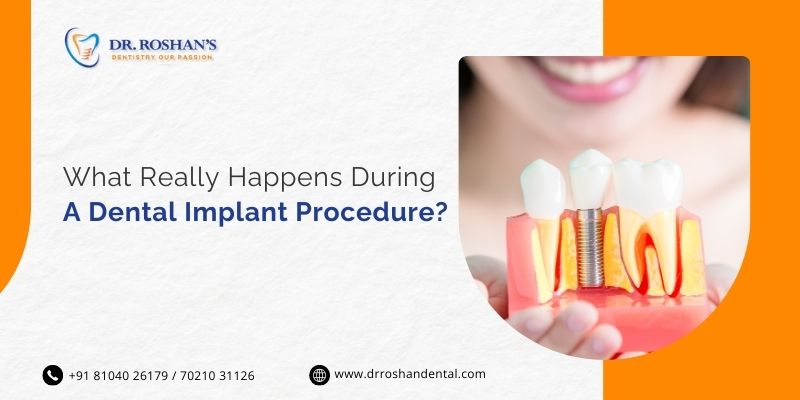
Think of a dental implant as a strong foundation that replaces the root of your missing tooth. It’s usually made of medical-grade titanium, which fuses naturally with your jawbone over time. Once integrated, it holds a custom-made crown, bridge, or denture, which means it not only looks natural but also acts like a real tooth.
Unlike removable dentures or traditional bridges, dental implants are a fixed, long-term solution. They don’t shift, don’t need glue, and don’t affect your nearby teeth. They’re stable, they feel like a part of you, and they’re designed to last.
Dental Implant Process Step by Step
Here’s what you can expect during a full dental implant process step by step.
1. The First Consultation
This is your starting point. You’ll meet with the implant expert who will evaluate your dental health, discuss your concerns, and take detailed scans, often 3D imaging or digital X-rays. The goal is to get a clear picture of your jawbone and decide whether you’re ready for implants.
2. Customized Treatment Planning
Every smile is different. Based on the scans, a personalized treatment plan is created for you. If your bone is weak or thin, you may need a bone graft before implant placement, but newer techniques can often work around that, too.
3. Surgical Implant Placement
This is when the actual implant, the titanium post, is placed in your jawbone. It’s done under local anesthesia, and the procedure is relatively quick. You won’t feel pain during the process, and it’s usually done on an outpatient basis.
4. Healing and Osseointegration
After placement, your jawbone begins to bond with the implant in a natural process called osseointegration. This is what makes the implant strong. Healing time varies, but it typically lasts around 3–6 months. During this time, you might wear a temporary crown.
5. Placing the Abutment
Once healing is complete, a small connector called an abutment is attached to the implant. This is what will support your final crown.
6. Final Crown Placement
Finally, a permanent crown, custom-designed to match your natural teeth in color and shape, is securely attached to the abutment. You now have a complete, functional tooth.
What Happens During a Dental Implant Procedure — Comfort and Care
The idea of surgery can be nerve-wracking for anyone. But here’s the good news: the process is far more straightforward and gentle than most people expect. With advancements in digital imaging, minimally invasive tools, and a skilled hand, placing a dental implant today is often easier than removing a tooth.
Most individuals report mild swelling or tenderness for one to two days post-surgery. Prescribed pain medications and proper aftercare instructions will be shared by your dental team. Recovery is usually smooth if you follow their guidance.
At Dr. Roshan’s Advanced Dental Clinic, we make it a point to ensure every step is done with care and clarity. Our goal is to help you feel relaxed, informed, and supported, from the first consultation to the day you walk out with your new smile.
Why Dental Implants Are Important
Let’s talk about the bigger picture. Missing teeth don’t just affect how you look; they can create more serious issues:
- 1. Jawbone shrinkage
- 2. Difficulty chewing food
- 3. Speech changes
- 4. Changes in facial structure
- 5. Drifting of nearby teeth
Implants are the only tooth replacement option that integrates with your jawbone, stimulating bone growth and helping to maintain your facial shape and oral health in the long run. That’s what sets them apart.
If you’re based in Mulund East and seeking a long-term solution, we at Dr. Roshan’s Advanced Dental Clinic offer world-class dental implant treatment in Mulund East, utilizing strategic, safe, and aesthetically driven techniques for lasting results.
Key Benefits of Dental Implants
- Natural Aesthetics: They blend with your smile seamlessly
- Chewing Efficiency: Enjoy your food without discomfort
- Bone Support: Prevent bone loss and preserve facial volume
- No Damage to Other Teeth: Unlike bridges, implants stand independently
- Long-Term Investment: With proper care, implants can last for decades
Real Questions, Clear Answers
1. How painful is the dental implant surgery?
The surgical procedure itself is performed under local anesthesia, so it’s typically painless. Post-surgery discomfort is normally manageable and often described as less severe than the discomfort associated with a tooth extraction. Most individuals return to their normal routines within a couple of days, especially when post-care instructions are followed well.
2. How long does the full dental implant process take?
From your first consultation to final crown placement, the timeline usually spans 3 to 6 months. The healing period (osseointegration) is the longest step. However, in some cases, same-day or three-day implant solutions may be considered depending on your oral health condition and bone strength.
3. Are dental implants safe for older adults?
Absolutely. Age is not a limiting factor as long as your general health is good and your jawbone is strong enough to support the implant. In fact, older adults benefit greatly from implants, especially when dealing with loose dentures or multiple missing teeth.
4. Will I need to replace my dental implant in the future?
Dental implants are designed to be a long-term solution. The implant itself can last decades with regular care. However, the crown may need replacement after 10–15 years due to regular wear.
5. Do implants require different brushing or maintenance?
Not at all. Implants are maintained just like your regular teeth. Brushing twice a day, flossing, and visiting your dentist every 6 months will help keep your implant in good condition. The goal is to maintain good oral hygiene around the implant area to avoid infection or complications.
Dental Implant Treatment You Can Trust
If you're someone from Mulund East who has been putting off tooth replacement because you’re unsure what’s involved, know that we at Dr. Roshan’s Advanced Dental Clinic offer full-scope dental implant treatment in Mulund East, from digital diagnostics to precision-guided implant placement, all under one roof, in a space where care meets expertise.