A patient at Dr. Roshan Dental Clinic recently asked us something right before an MRI appointment:
"Doctor, should I mention my implant before the scan?"
It is a very common concern. Many people with dental implants worry that the metal inside the mouth might interfere with MRI machines or trigger airport security alarms. Some even avoid scans unnecessarily because they assume implants are unsafe around magnetic equipment.
In reality, modern implants are designed using medically tested materials that are safe for everyday activities, including travel and medical imaging. Most patients with implants continue traveling, undergoing scans, and carrying on with daily life without any problems related to scanners or detectors.
Understanding how implants actually behave inside MRI machines and security systems helps remove a lot of unnecessary confusion and fear.
Why People Worry About Implants and Scanners
The concern usually starts because implants contain metal components. Naturally, people assume anything metallic may react with scanners or magnets.
But not all metals behave the same way.
Modern safe dental implant materials are carefully selected for medical use. Most implants today are made from titanium, which behaves very differently from highly magnetic metals like iron.
This is why concerns about titanium and MRI scans are usually much smaller than patients expect.
What Are Implants Made Of?
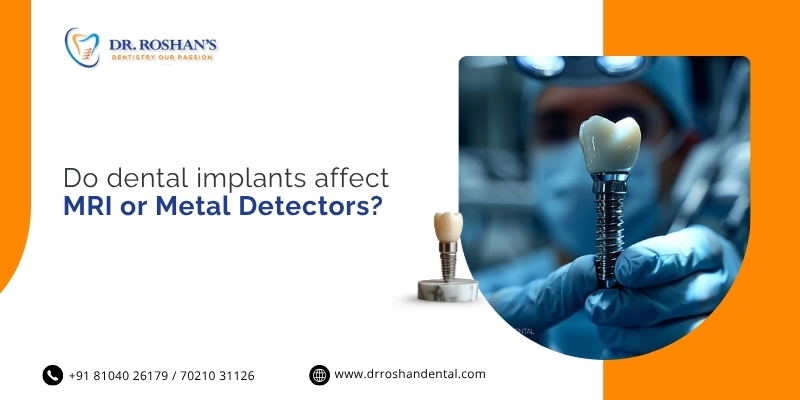
During a dental implant treatment, a titanium post is placed into the jawbone, where it acts like an artificial tooth root. Over time, the bone heals around the implant and stabilizes it naturally.
Titanium is widely used because it is:
- lightweight
- durable
- corrosion resistant
- highly compatible with the human body
This long history of titanium implant safety is one reason implants are trusted in modern dentistry.
Patients who have experienced tooth loss often prefer implants because they provide stable support and help restore chewing comfort naturally.
Are Dental Implants Magnetic?
This is one of the biggest misconceptions.
Most modern implants are considered non magnetic dental implants because titanium does not react strongly to magnetic fields.
That means implants usually:
- do not move during MRI scans
- do not become hot inside MRI machines
- rarely interfere with medical equipment
The strong MRI compatibility of implants is one reason they are considered safe for most medical imaging procedures today.
Can Dental Implants Affect MRI Scans?
In most situations, no.
Patients who undergo dental implant treatment can usually safely continue MRI scans as needed later. Titanium implants are generally compatible with modern imaging systems.
However, certain metallic restorations near the face may occasionally create small image disturbances close to the scan area. This depends on:
- the location being scanned
- the material used
- the type of imaging machine
For example, an MRI scan of the knee or lower back is extremely unlikely to be affected by a dental implant.
Still, radiology teams usually ask patients about implants beforehand to ensure proper medical scan compatibility assessment.
Why Titanium Is So Widely Used
Titanium has been trusted in medicine for decades because it works safely inside the body.
In implant dentistry, titanium helps support:
- long-term stability
- bone healing
- chewing strength
- gum compatibility
Patients looking for implants are often relieved to learn that titanium is also used in several orthopedic and medical procedures outside dentistry.
Its excellent record of titanium implant safety makes it one of the most dependable materials available.
Will Metal Detectors Detect Dental Implants?
Most implants are too small to trigger airport metal detectors.
A single implant or implant crown contains very little metal compared to larger orthopedic devices. Most patients travel regularly without facing security problems.
People with one implant, multiple implants, or even a full restoration usually pass through airport security normally.
Modern airport systems are already designed to handle many medical restorations safely, so major security scanner concerns are uncommon.
What About Full Mouth Implants?
Even larger restorations rarely create serious airport issues.
Patients undergoing extensive tooth replacement treatment sometimes assume multiple implants will automatically trigger alarms. In reality, larger orthopedic implants like hip replacements are much more likely to activate scanners than dental restorations.
Still, informing airport staff about major dental work may occasionally help if additional screening becomes necessary.
Why Implants Matter Beyond Appearance
Patients often focus on scanners while forgetting the larger purpose of treatment.
A missing tooth affects much more than your appearance and travel plans. Long-term tooth loss may gradually reduce chewing efficiency and weaken surrounding bone support.
During a tooth implant procedure, the implant functions like an artificial tooth root and helps maintain:
- chewing balance
- bone stimulation
- jaw support
- bite stability
This is one reason dental implants in Mulund East at Dr. Roshan Dental Clinic remain a trusted option for permanent teeth replacement.
Understanding the Implant Process
During a dental implant surgery, the implant post is carefully placed into the jawbone after proper planning and imaging.
Healing happens gradually over several weeks or months. During this period:
- the gums recover
- bone attaches to the implant
- stability improves steadily
Once healing is complete, the final implant crown is attached to restore appearance and function.
The entire tooth replacement process depends greatly on the patient's oral health and jawbone density.
Why Bone Support Matters
Some patients lose bone support after long-term tooth loss. In such situations, bone grafting for implants may be recommended before implant placement.
This helps improve:
- bone volume
- implant stability
- long-term support
- healing strength
Patients with lower jawbone density often benefit from this additional preparation before implant placement begins.
Are Bone Grafts Safe During MRI Scans Too?
Yes, in most cases.
Materials used during bone grafting for implants are selected carefully for medical safety and compatibility. They are not highly magnetic materials that typically create major MRI concerns.
Modern safe dental implant materials are designed specifically to support healing while remaining compatible with medical imaging procedures.
Do Crowns Affect MRI Scans?
A single implant crown generally does not create major MRI problems.
Some metallic restorations near the scan area may occasionally produce mild image distortion, depending on:
- crown material
- scan location
- imaging type
Most modern restorations today follow better standards for MRI safe dental restorations compared to older metallic restorations used years ago.
Why Patients Should Inform Their Doctor
Even though implants are considered safe during MRI scans, patients should always inform the radiology team beforehand.
Sharing implant details helps:
- improve imaging accuracy
- reduce confusion
- assess medical scan compatibility
- adjust scan settings if required
Patients with older restorations or multiple metallic treatments should especially mention these details before imaging begins.
Do Implants Interfere With Electronics?
No.
Modern non magnetic dental implants do not interfere with:
- mobile phones
- Bluetooth devices
- household electronics
- Wi-Fi systems
- regular medical equipment
Patients sometimes imagine implants behaving like magnets inside the mouth, but titanium does not function that way.
Long-Term Implant Safety
Many patients choose implants because they provide stable, long-term support after tooth loss.
A properly planned dental implant treatment may help improve:
- chewing comfort
- smile confidence
- oral stability
- bite balance
With good oral hygiene and regular check-ups, implants can remain stable for many years. This reliability is one reason implant dentistry continues to remain highly trusted for permanent teeth replacement.
Proper Planning Makes a Difference
Every patient's oral condition is different.
Before starting any dental implant treatment, factors like gum health, bone support, bite condition, healing ability, and medical history are evaluated carefully.
At Dr. Roshan Dental Clinic, patients considering dental implants in Mulund East are guided through every stage clearly so they understand both the procedure and long-term care involved afterward.
Living Normally With Dental Implants
Most patients eventually stop thinking about their implants because they begin feeling natural during everyday life.
Eating, traveling, smiling, and even undergoing medical scans usually continue without major restrictions. The fears patients initially have about scanners often disappear once they understand how modern implants are actually designed.
Modern safe dental implant materials and improved MRI compatibility of implants have made implants highly dependable for routine life today.
Modern Implants Are Designed for Everyday Comfort
Most MRI scans and airport metal detectors do not create problems for patients with dental implants. Today's implants are designed for durability, safety, and compatibility with normal daily activities.
At Dr. Roshan Dental Clinic, we often remind patients that implants are meant to restore comfort and confidence, not create limitations. With proper care and regular maintenance, most people continue traveling, eating, and living comfortably without worrying about scanners or medical imaging.
FAQs
Q1. Can I do MRI if I have metal in my teeth?
Yes, in most situations. Modern MRI safe dental restorations and titanium-based implants are generally compatible with MRI scans. Informing the radiology team beforehand helps ensure proper evaluation.
Q2. Can dental crowns affect MRI?
A single implant crown usually does not create major MRI issues. Some metallic restorations may occasionally affect nearby image clarity depending on the scan area.
Q3. Can I have an MRI if I have dental fillings?
Most modern fillings are considered safe during MRI scans. Dentists and radiology teams may still ask about existing dental work before imaging begins.
Q4. How long do dental implants last?
With proper oral hygiene and regular dental visits, implants can last for many years. Good bone support and healthy gums play a major role in long-term success.
What to expect during a dental implant?
A tooth implant procedure usually includes consultation, imaging, implant placement, healing, and crown attachment. The process is planned according to bone support and overall oral health.